EU and Republic of Korea advance implementation of Security and Defence Partnership
The European Union and the Republic of Korea are moving beyond diplomatic pleasantries into the realm of operational military alignment, a shift that signals a deepening European commitment to the Indo-Pacific security architecture.
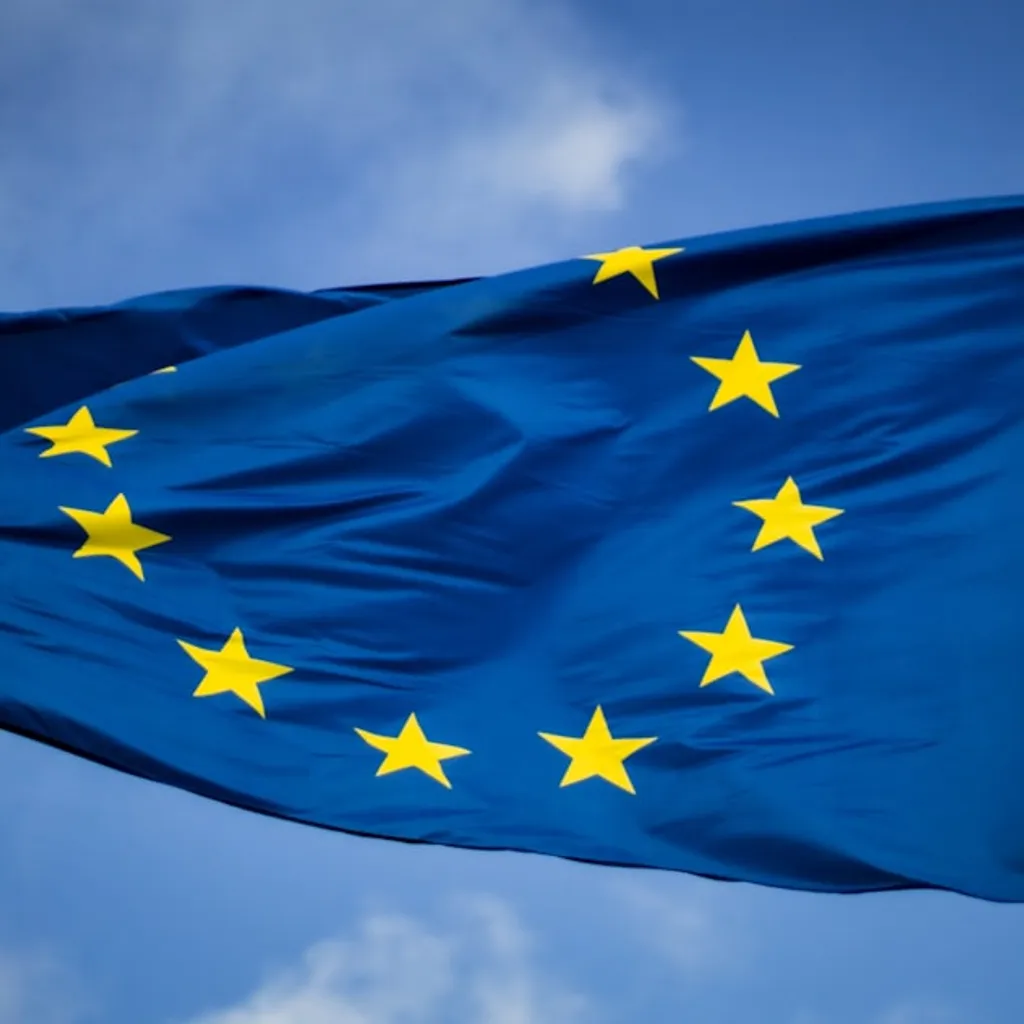
From Dialogue to Deployment
The implementation of the Security and Defence Partnership, originally signed in November 2024, has transitioned into a phase of concrete structural changes. Most notably, the EU-ROK Security and Defence Dialogue has been upgraded to the Managing Director level, a move intended to provide more rigid strategic direction and political oversight. This is not merely a change in title; it represents a desire to bypass lower-level bureaucratic hurdles in favor of direct executive coordination.
On the ground—or rather, at sea—the partnership has already yielded a joint naval exercise involving the Republic of Korea and Operation Atalanta, the EU’s maritime security mission in the North-West Indian Ocean. This cooperation is being further cemented by the planned deployment of a dedicated EU Military Advisor to the Delegation in Seoul. For those observing from a French perspective, this deployment is a clear indicator that the EU is no longer content with being a "soft power" observer in the Indo-Pacific, but is seeking a permanent, expert presence to facilitate day-to-day engagement on defense matters.
The agenda between Brussels and Seoul has also expanded to include high-stakes technical fields. Dedicated exchanges on cyber policy and a roundtable on diplomatic responses to malicious cyber activities reflect a shared anxiety over foreign information manipulation and interference. As both regions face increasingly sophisticated state-sponsored digital threats, the alignment of their "rules-based" frameworks is a calculated move to build a collective defense against non-traditional warfare.
The G7 Backdrop and the Security Lockdown
While high-level officials in Brussels and Seoul discuss "resilience" and "stability," the practical reality of hosting such geopolitical maneuvers is currently being felt on the French-Swiss border. As France prepares for the G7 summit starting June 15 in Evian-les-Bains, the rhetoric of international cooperation is being met with a massive domestic security mobilization.
French authorities are deploying 8,000 police officers to secure the Evian venue, while neighboring Switzerland is mobilizing 4,000 soldiers. The logistics of the summit have effectively turned the region into a fortress, with 27 border crossings between France and Switzerland scheduled for closure or strict control starting Friday evening. For the local economy, the cost of this "stability" is high; Geneva alone expects to spend approximately 20 million Swiss francs on security measures to manage an anticipated 50,000-strong anti-G7 protest.
The cynicism of the situation is not lost on local residents. While G7 leaders will land in Geneva before being whisked across the border to the luxury of Evian, shopkeepers in Geneva have already boarded up their premises with over 2,000 square meters of wooden panels. The "catastrophic impact" reported by local businesses—with taxi drivers and souvenir shop owners facing days of lost revenue—serves as a stark reminder of the friction between global diplomatic ambitions and local economic reality.
Strategic Implications for the Indo-Pacific Pivot
The timing of the EU-ROK progress reports alongside the G7 summit highlights a broader trend: the "indivisibility" of European and Asian security. The discussions in Brussels explicitly linked the war in Ukraine with security developments on the Korean Peninsula, suggesting that the EU now views North Korean maneuvers and Indo-Pacific stability as directly relevant to its own territorial integrity.
For France, which maintains significant territories and a permanent military presence in the Indo-Pacific, this EU-wide alignment with South Korea provides a multilateral "force multiplier" for its own regional interests. The focus on non-proliferation and disarmament remains a cornerstone of this relationship, reflecting a shared perspective on global security threats that transcend regional borders.
As the EU positions itself as a "capable, predictable, and reliable" security partner, the deployment of military advisors and the conduct of joint naval drills suggest that the "Indo-Pacific pivot" is no longer just a policy paper—it is becoming a permanent feature of the European defense landscape. Whether this increased military footprint actually leads to greater stability, or simply more expensive security lockdowns, remains the cynical question for those watching from the boarded-up streets of Geneva.